
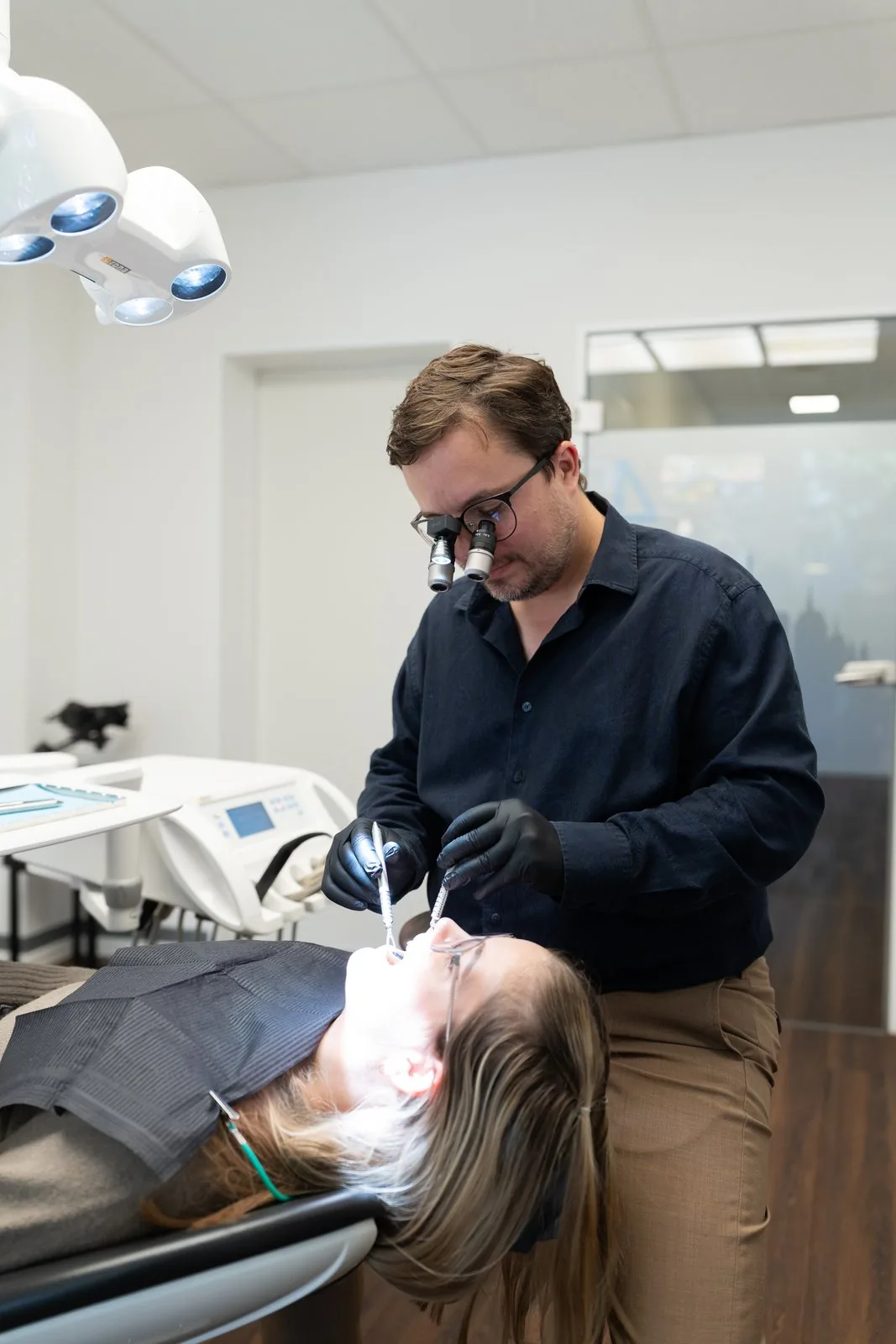
Periodontitis is a chronic bacterial inflammation of the tissues that hold the teeth. It does not hurt for a long time, but if left untreated it breaks down the jawbone and is the most common cause of tooth loss in adults. As a rule it can be halted if it is recognised and treated consistently, with your cooperation at home. With the corresponding findings, the treatment is covered by the statutory health insurance.
How you notice it
Bleeding gums when brushing, receding gums, sensitive tooth necks, bad breath, loose teeth or teeth that drift apart. Often you notice nothing for a long time. That is why we measure the gum pockets at every check-up; for new patients, supplemented by an inflammation test (aMMP-8), which indicates active inflammation before it becomes visible.
How we treat
- Findings. Pocket depths, bleeding, X-ray and risk factors such as smoking or diabetes. The findings are explained to you, along with a plan based on the current guideline.
- Pre-treatment. Professional cleaning, instruction in interdental care, and where needed laser treatment against the bacteria in the pocket (168 €).
- Cleaning the gum pockets. Under local anaesthesia we remove plaque and deposits from the root surfaces, using ultrasound and the laser to reduce bacteria.
- Check-up. After a few weeks we check where the inflammation has receded. Deep residual pockets are treated specifically, in rare cases surgically.
- Aftercare. Periodontitis remains a chronic disease. Supportive periodontal therapy (UPT) at fixed intervals, usually every three to six months, helps to maintain the result. The statutory health insurance covers it for two years after the findings; after that, as a private recall, 168 € per appointment.
Receding gums and sensitive tooth necks
Exposed tooth necks react to cold and look long. Causes include periodontitis, but also brushing too hard or teeth grinding. In suitable cases, exposed areas can be covered with a connective tissue graft from the palate. Whether this is possible for you depends on the cause and extent; often a change in brushing technique and sealing of the tooth necks help first.
Periodontitis and your body
Periodontitis has been linked to diabetes, cardiovascular disease and risks in pregnancy. More on this: Periodontitis and general health. Before implant placement we always treat periodontitis first, otherwise it endangers the implant.
Who treats you
Dr. med. dent. M.Sc. Sandro Strößner deepened his knowledge of periodontology in the master's programme in Oral Implantology and Periodontology (Steinbeis University Berlin with the German Society of Implantology); treatment follows the current S3 guideline. Pre-treatment and aftercare are carried out by our prophylaxis team with fixed allocation.
What it costs
Systematic periodontitis treatment is covered by the statutory health insurance with the corresponding findings, as is aftercare for two years. Private services such as laser, the aMMP-8 test (89 €) or the complete treatment as a private service (2,100 €) are listed openly on the page What does what cost?
Professionally responsible: Dr. med. dent. M.Sc. Sandro Strößner, dentist, Master of Science in Oral Implantology and Periodontology · Last reviewed: September 2026. These texts provide general information and do not replace an examination.
Video
Briefly explained – from our practice
The videos provide general information and do not replace individual advice; the course and outcome of treatment depend on personal circumstances. All videos have subtitles. More in our media library and on Instagram.
