
How to recognise an inflammation
Persistent or throbbing pain, sensitivity to heat, pain when biting, a tooth that turns darker, or a swelling on the gum. Sometimes nothing at all: then the inflammation is only noticed on the X-ray. In any case: the earlier, the more likely the tooth can be preserved.
How Treatment Works
- Findings and X-ray. We check whether the tooth is worth preserving and show you the image.
- Anaesthesia and rubber dam. A rubber dam separates the tooth from the rest of the mouth: no saliva in the canal, no irrigation solution in the mouth.
- Locating and cleaning the canals. With magnifying loupes and light we find even fine canals. Electronic length measurement determines the canal length precisely, with fewer X-rays. Flexible nickel-titanium files prepare the canals mechanically, even when they are strongly curved.
- Disinfection. Irrigation solutions and, where needed, the laser reduce bacteria in the fine branches.
- Filling. The canals are sealed tightly thermoplastically, that is, with warmed material.
- Build-up. A root-treated tooth is more brittle than a healthy one. It usually needs a crown or a partial crown so that it does not fracture. Both are made in the in-house master laboratory.
Depending on the tooth and the inflammation, one to three appointments are needed. Between appointments the tooth remains temporarily sealed.
What it costs
For teeth worth preserving, root canal treatment is usually covered by the statutory health insurance. Procedures that go beyond the statutory cover, such as electronic length measurement, mechanical preparation and thermoplastic filling, are charged as a out-of-pocket amount depending on the number of canals: one canal 158 €, two canals 315 €, three canals 475 €, four canals 635 € (as of March 2026). All amounts are listed openly on the page What does what cost?; the cost plan issued before treatment is binding.
If it does not heal
Not every inflammation heals after root canal treatment. The tooth can then often still be preserved by an apicectomy. If that is not possible either, we discuss the replacement with you, usually an implant. What is the better choice in your case is decided by the findings and your wishes, not by a template.
Who treats you
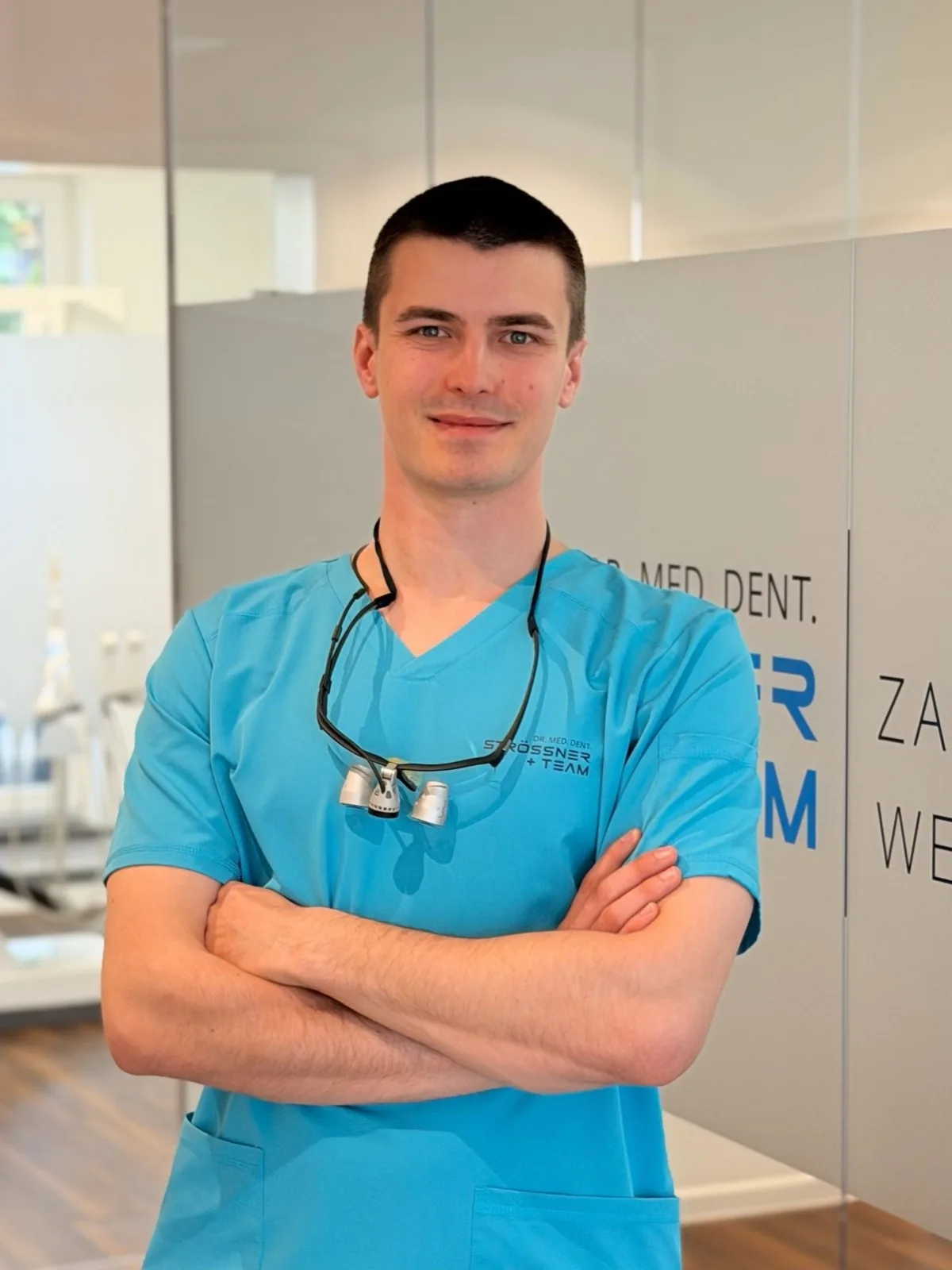
Root canal treatments are carried out by Johannes Deutloff, employed dentist, and the entire dental team. Tooth preservation takes priority with us; how we justify that is explained by Johannes Deutloff in the short video at the bottom of this page.
Professionally responsible: Dr. med. dent. M.Sc. Sandro Strößner, dentist, Master of Science in Oral Implantology and Periodontology · Last reviewed: September 2026. These texts provide general information and do not replace an examination.
Video
Briefly explained – from our practice
The videos provide general information and do not replace individual advice; the course and outcome of treatment depend on personal circumstances. All videos have subtitles. More in our media library and on Instagram.
