
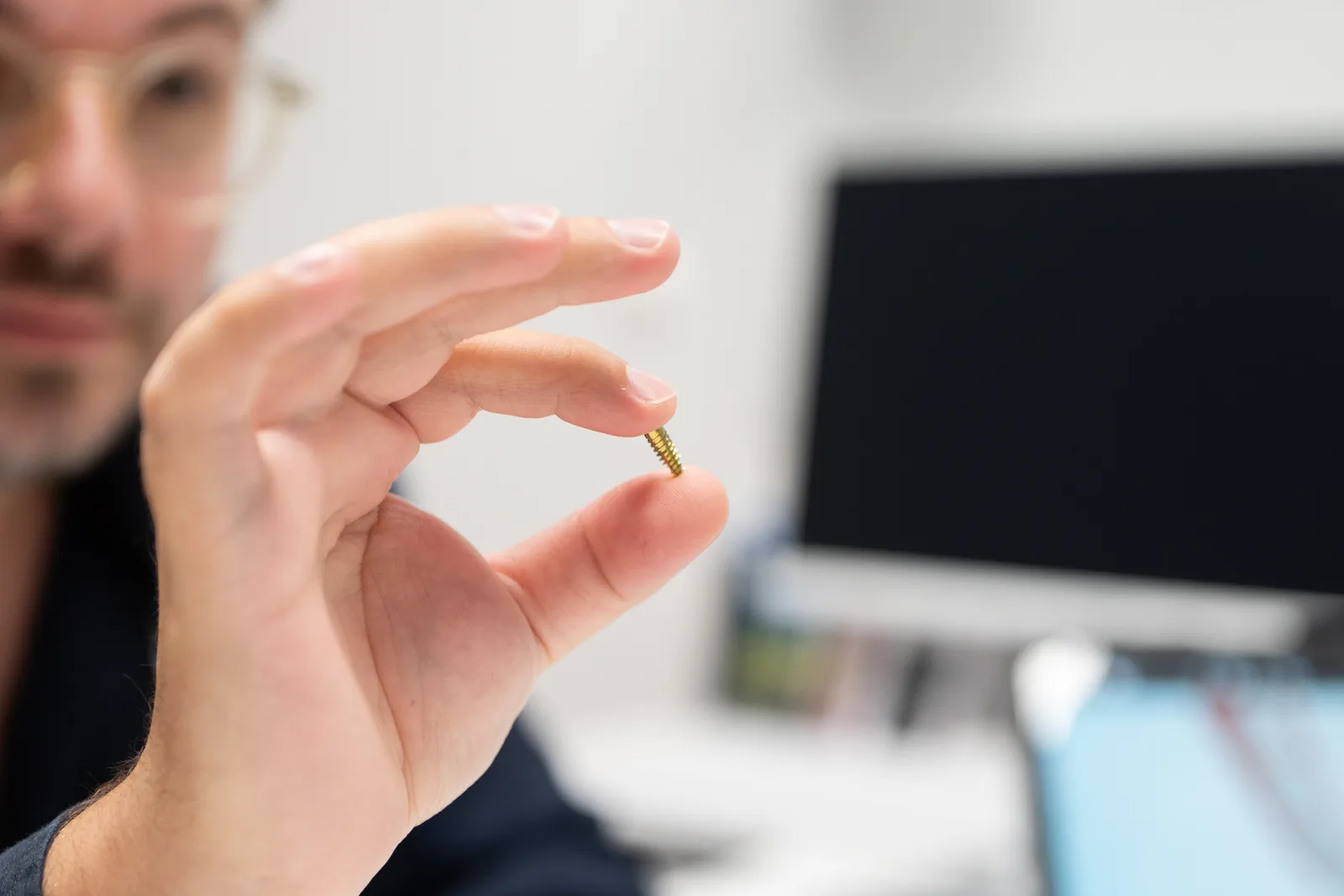
A ceramic implant is made of zirconia instead of titanium. It is white, contains no metal and is suitable for people with metal intolerance or a wish for a metal-free restoration. Titanium implants have the longer track record of data; ceramic implants show good medium-term results. Which system makes sense for you is clarified after a 3D scan and examination. We place both, as a rule, using navigation, under sedation (twilight sleep) on request.
Explained in detail: On our dedicated site bio-zahnmedizin.com you will find background information on metal-free dentistry, amalgam removal and autologous blood concentrate (PRF).
Book an initial consultation on ceramic implants
Who ceramic is suitable for
- Metal intolerance or allergy. Zirconia is metal-free and is considered very well tolerated by the tissue.
- Thin gums in the visible area. A white implant does not show through grey, unlike titanium with very thin tissue.
- The wish to avoid metal in the mouth. Even without a proven intolerance, a legitimate reason that we take seriously.
What you should know
- Evidence. Titanium has been in use for decades; for ceramic implants there are good studies covering several years, but long-term data beyond ten years are still limited. How long an implant lasts depends on bone, oral hygiene and aftercare, with both materials.
- One-piece or two-piece. Ceramic implants are available in both designs; which one suits depends on position and load. We decide that with you on the basis of the plan.
- Costs. We charge ceramic implants the same as titanium implants: complete package 2,900 €, with crown from 4,090 € out-of-pocket for a single tooth; the exact amount is stated in the treatment and cost plan after the 3D scan. All amounts: What does it cost?
Process
- Consultation and 3D scan. We examine bone, gums and your medical history and discuss whether ceramic or titanium is the better choice for you.
- Digital planning and navigated implant placement. As with all dental implants, we plan on screen and, as a rule, place with X-Guide. On request under sedation or general anaesthesia.
- Healing. The implant bonds with the bone over a few months. During this time you wear a temporary restoration from our laboratory if needed.
- All-ceramic crown. Metal-free right up to the crown: it is made in our in-house master laboratory, and the master dental technician checks colour and shape at the chair.
Metal-free right up to the restoration
Those who choose ceramic implants usually also want to avoid metal in their restoration. We make crowns, bridges and denture bases metal-free from zirconia and ceramic. More on the page Biological dentistry.
Professionally responsible: Dr. med. dent. M.Sc. Sandro Strößner, dentist, Master of Science in Oral Implantology and Periodontology · Last reviewed: September 2026. These texts provide general information and do not replace an examination.
Video
Briefly explained – from our practice
The videos provide general information and do not replace individual advice; the course and outcome of treatment depend on personal circumstances. All videos have subtitles. More in our media library and on Instagram.
